
$42.00
$60.00

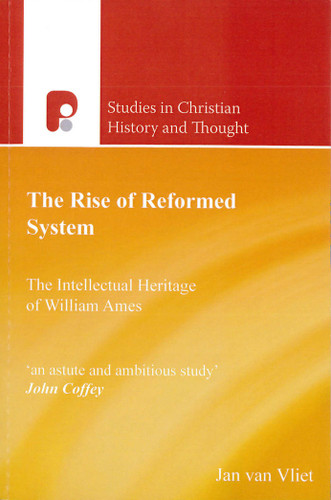
Description
This unique and persuasive work establishes the significance of the thought of Puritan William Ames (1576-1633) in deepening and systematizing established Reformation teaching on Christian doctrine and life in a way that ensured its subsequent development through the early modern period and beyond.
Contents
Endorsements
"This is a masterful treatment of the thought of the great Puritan theologian William Ames. It sets out winsomely how, through the tools of covenant thinking and Ramist logic, Ames accomplished his goal of making Calvinism a properly experiential religion, and theology a system of practical instruction in "living unto God." It demonstrates how Ames served as the crucial link between his forebears in the Reformed tradition—especially John Calvin and William Perkins—and his successors in Puritanism and the Dutch Second Reformation. Clear, comprehensive, and marked by thorough scholarly command, the volume will be valued by novice and specialist alike."
—James D. Bratt, Professor of History, Calvin College, Michigan, USA
"In this scholarly monograph Jan van Vliet ably supplements Keith Sprunger's classic work on William Ames, giving us a fuller understanding of this influential Puritan theologian. Van Vliet carefully argues that Ames provides an example of how the graciously given covenant can be held together with an unapologetic call for the believer's vibrant response of obedience. But this study covers far more than just Ames; the reader is taken through the necessary background behind his theology (e.g., Calvin, Perkins) and given nuanced treatment of his influence (e.g., van Mastricht, Edwards). This work offers a helpful contribution to Puritan studies."
—Kelly M. Kapic, Professor of Theological Studies, Covenant College, Georgia
About the Author
Jan van Vliet is Professor of Economics at Dordt College in Sioux Center, Iowa. He is a member of the Kuyper Translation project.

Van Asselt, Willem J.


Beeke, Joel R. & Williams, Garry J.
Beeke, Joel R. & Williams, Garry J.

My Personal Guarantee to You
For over 30 years, I have personally reviewed and approved every book we sell at Reformation Heritage Books. My aim has always been to place into your hands books that are biblically and theologically sound, warmly Reformed, deeply experiential, and eminently practical—books that truly nourish the soul and your daily life as a Christian.
Here’s my personal guarantee: if you purchase a book from us and do not find it profitable, we gladly offer a full refund—shipping included. Feed your soul and mind with a good book today.
With warmest regards in Christ,
Dr. Joel R. Beeke
Founder and Chairman, Reformation Heritage Books